


Key Takeaways
-
The best cat toys match your cat's age, play style (chasing, pouncing, chewing), and energy level-not just the price tag or marketing hype. Observe how your cat naturally moves and reacts before investing.
-
Four toy categories cover most cats' needs: wand toys for active chasers, puzzle toys for mental stimulation, catnip toys for stress relief, and a good dental toy for safe chewing.
-
Rotate toys weekly, mix interactive play sessions (with you) and solo play options, and inspect every toy for damage before each use. Switching out toys can help prevent boredom in cats.
-
Indoor cats absolutely need engaging toys to stay healthy, maintain a good weight, and avoid stress-related cat behavior issues like destructive scratching or aggression.
Introduction: Why Cat Toys Matter for Every Indoor Cat
Indoor cats in 2026 don't have fields to stalk through or trees to climb on demand. Cat toys fill that gap by replacing the hunting, climbing, and foraging behaviors that cats would otherwise perform outdoors. Without them, indoor cats are at higher risk for weight gain, anxiety, and frustration-driven destruction.
The right cat toys can prevent boredom, reduce the urge to scratch furniture, and even help manage your cat's weight through daily exercise. Research shows that regular play correlates with higher quality of life, fewer behavior problems, and stronger bonds between cats and their owners. Cat toys keep indoor cats mentally stimulated and physically active every single day.
But here's the reality: the best toy for one cat might bore another completely. Many pet parents need to try a few different types before they discover their cat's favorite toy. During our research, testing involved 51 popular cat toys with real cats, and the results confirmed that no single toy works for every kitty. This article walks you through specific toy types-bird toy options, catnip toys, dental toy picks, puzzle toys, and electronic toys-plus safety and care tips to keep your cat entertained for the long haul.
How to Pick the Best Cat Toys for Your Cat's Personality
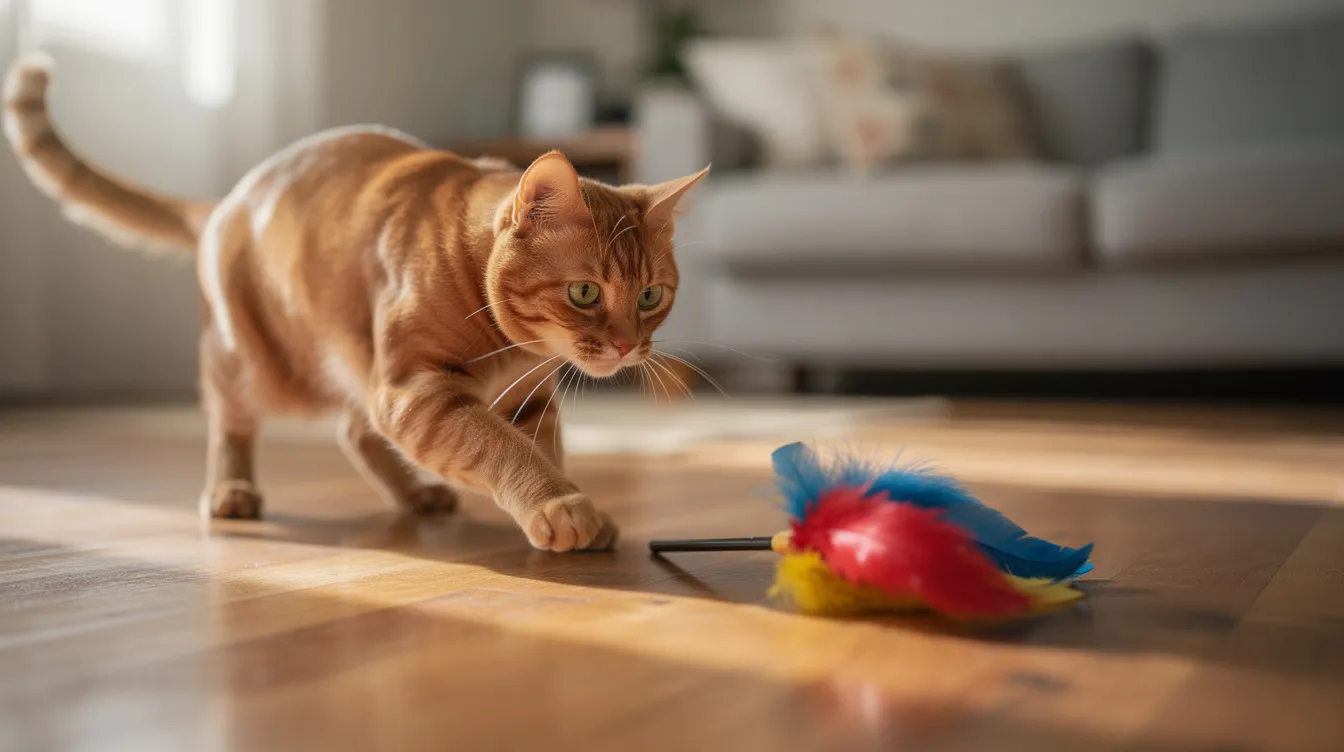
Choosing the best cat toys starts with watching your cat. Spend a few days observing how your cat naturally moves, what it chases, and where it hides. This tells you more about what your cat likes than any product review ever could. Pay attention to whether your cat is a sprinter, an ambusher, a food-driven problem solver, or a laid-back lounger-because each play style demands different types of toys.
-
Chasers: If your cat goes crazy chasing anything that moves, focus on wand toys, track balls, crinkle balls, and motion-activated toys. These cats loved playing with anything they can chase across the room, and they thrive with fast-moving interactive toys. Cats enjoy interactive toys like laser pointers and chasers, so consider these as well.
-
Stalkers and pouncers: Cats who prefer hiding behind furniture and ambushing ankles do best with tunnels, kicker toys, and realistic plush prey. Soft plush toys provide warmth and satisfy cats' hunting instincts, making toy mice and mouse toy options ideal for this personality type. Even a simple toy tucked behind a cushion can trigger a pounce.
-
Food-motivated cats: If your cat sprints to the kitchen at the sound of a treat bag, puzzle toys and treat dispensers are among the best toys to hold a cat's interest long term. They turn mealtime into a fun foraging game.
-
Sedentary or shy cats: Gentle catnip toys, soft plush mice, and slow-moving interactive toys work well for cats that get overwhelmed by fast action. Start with low-intensity play near their favorite hiding spot or cat tree. Kittens need soft, simple toys without hazardous components, and senior cats benefit from toys that require less physical effort-so both groups often fall into this gentler play style.
In multi cat households, you may find two cats with completely different preferences living under the same roof. That's normal. Stock a mix of different types so every cat has something it gravitates toward.
Best Interactive Wand and Bird Toys
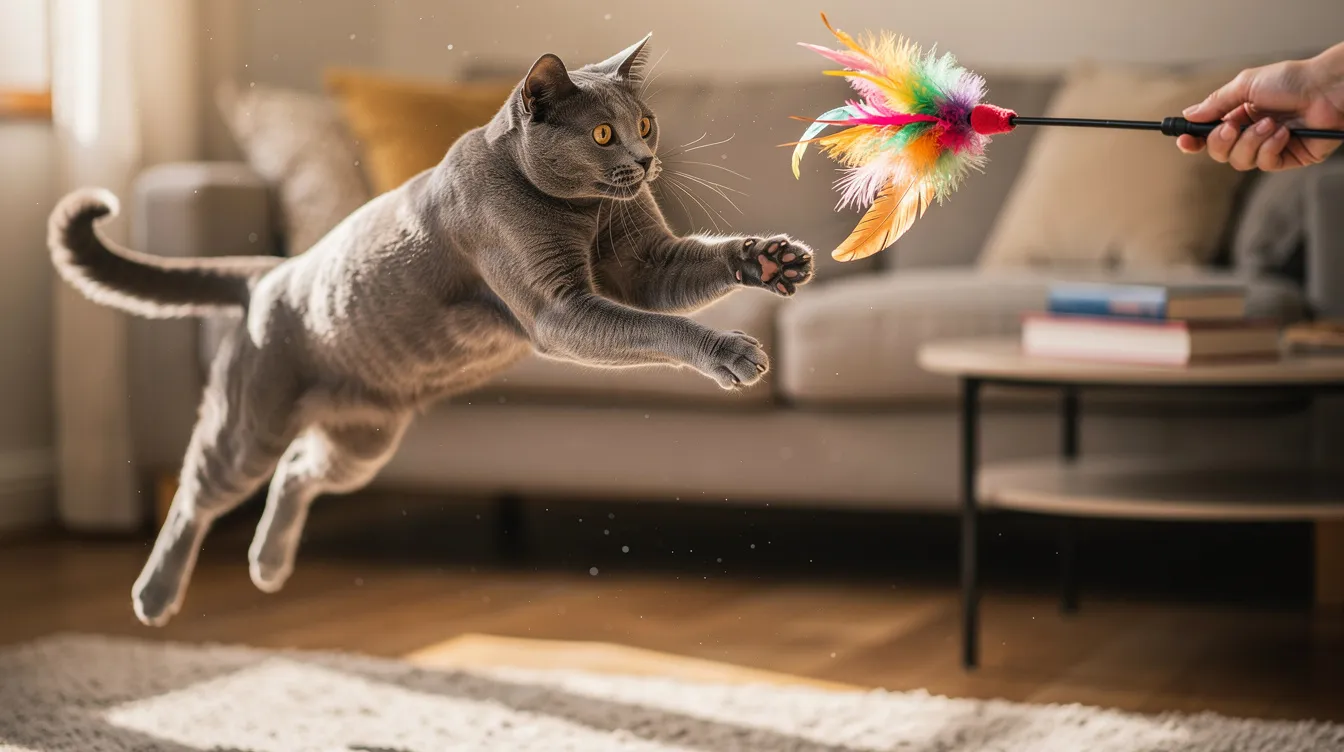
Wand toys and bird toys are often a cat's favorite toy because they mimic live prey in flight. Cats enjoy toys that mimic the movement of real animals, and nothing replicates a fluttering bird quite like a feather wand snaking through the air. Wand toys with feathers mimic prey and excite cats' hunting instincts like almost nothing else.
Here are the main styles worth trying:
-
Feather wands: The classic interactive cat toy. A flexible rod with feathers at the end that flutter when you flick your wrist. The Frisco Bird wand toy is popular among cats of all ages, and the Cat Dancer toy captivates cats more than many other toys-both are solid starting points. Tester cats consistently responded to these during evaluation.
-
Ribbon teasers: A fabric strip or ribbon attached to a stick. Great for slower, sweeping motions that get a cat excited without the noise of feathers. These work well in smaller spaces where a full feather wand might bump into walls.
-
Bird-lure wands: Some wands attach a bird toy that includes a bell or crinkle sound element, adding auditory stimulation to the visual motion. When the toy moves erratically, it holds attention longer.
Key considerations for any interactive cat toy in this category:
-
Look for a sturdy handle, a secure string attachment, and replaceable lures. Cheap attachments break fast under heavy play.
-
Move the wand like real prey-dart it behind furniture, let it "hide" under a blanket, circle it slowly on the ground. Predictable back-and-forth motion loses its appeal fast.
-
Supervision is necessary when using string-style toys with cats. Always store wand and bird toys completely out of reach after play so your cat doesn't chew the string or swallow small pieces. Cornell University's Feline Health Center specifically warns that linear strings can cause dangerous intestinal blockages.
How to Use Wand Toys for Healthier, Happier Play Sessions
Getting the most out of a wand toy isn't just about waving it around. Structure matters. Interactive toys boost activity and mental stimulation for cats, and interactive toys can help build bonds and keep cats mentally sharp-but only if sessions are done well.
-
Session length and frequency: Aim for 5–10 minute sessions, 2–3 times per day. Short bursts match a cat's natural hunting rhythm. End each session with an easy "catch" so your cat feels the satisfaction of capturing prey. This mirrors what happens in the wild and prevents the frustration that comes from never winning.
-
Vary height and speed: Alternate between dragging the wand on the ground, lifting it to mid-air, and letting it rest still before a sudden dart. This variation keeps cat playing sessions unpredictable and fun. Interactive toys enhance bonding between cats and owners when the human actively participates rather than just dangling.
-
Rotate attachments: Swap between a feather bird toy, fabric strip, and bug-like lure every few days. Studies confirm that cats habituate to identical toys quickly, but changing stimuli reignites interest.
-
Watch out for older cats and kittens: Avoid encouraging very high jumps for senior cats or young kittens to reduce the risk of joint strain. Keep the action closer to ground level and focus on lateral movement during playtime.
Catnip Toys, Kicker Toys, and the Best Dental Toys
Catnip toys and kicker toys are classic cat toys that encourage biting, grabbing, and rear-leg bunny kicking. They satisfy deep natural instincts that stem from predatory behavior, and they're perfect for rough play when your cat needs to burn off energy independently.
-
What catnip does: Catnip contains nepetalactone, a compound detected through a cat's olfactory system. It triggers a temporary neurological response-rolling, rubbing, biting, and zoning out-that typically lasts 5–15 minutes. Catnip toys reduce stress and trigger natural reflexes in cats, making them a go-to for enrichment. However, roughly 30–50% of cats don't respond at all due to genetics. Adult cats tend to show the strongest reaction.
-
Kicker toys: Banana-shaped, log-shaped, or fish-shaped, these toys let a cat wrap its front paws around the toy and kick with its hind legs. Catnip kicker toys satisfy the instinct to grab and bite prey, making every kicker toy a miniature outlet for hunting energy. Look for versions stuffed with catnip and crinkle material for maximum appeal-the combination of scent and sound is hard for most cats to resist.
-
Dental toys: A textured mesh or rubber dental toy encourages chewing and may help clean teeth and massage gums. These are particularly useful for cats that chew destructively or have oral hygiene concerns. Think of them as dual-purpose: satisfying the chewing urge while supporting dental health.
-
Choosing the best catnip toy or dental toy: Look for durable stitching, food safe materials, safe fillings, and no loose feathers or beads. Crinkle balls and toys with crinkle material inside tend to hold up well. Avoid anything with small glued-on eyes or decorative elements-they'll get chewed off and swallowed.
Getting the Most from Catnip Toys
Even the best catnip toy loses potency over time as the essential oils evaporate. A toy that once made your cat go crazy may get completely ignored after a few weeks.
-
Store catnip toys in an airtight container or zip-lock bag between sessions to preserve the scent. This single step can double the toy's effective lifespan.
-
Offer catnip toys only a few times per week rather than leaving them out 24/7. This keeps the experience special and prevents your cat from becoming desensitized.
-
For many cats that don't respond to standard catnip, try silvervine or valerian as alternatives. A 2025 study found cats prefer catnip or silver vine over commercial feline pheromones, and adding these scents to stationary toys significantly boosts interaction.
-
Kittens under 6 months typically ignore catnip toys completely. This is normal-sensitivity usually develops around the 6-month mark.
Puzzle Toys, Activity Centers, and Treat Dispensers
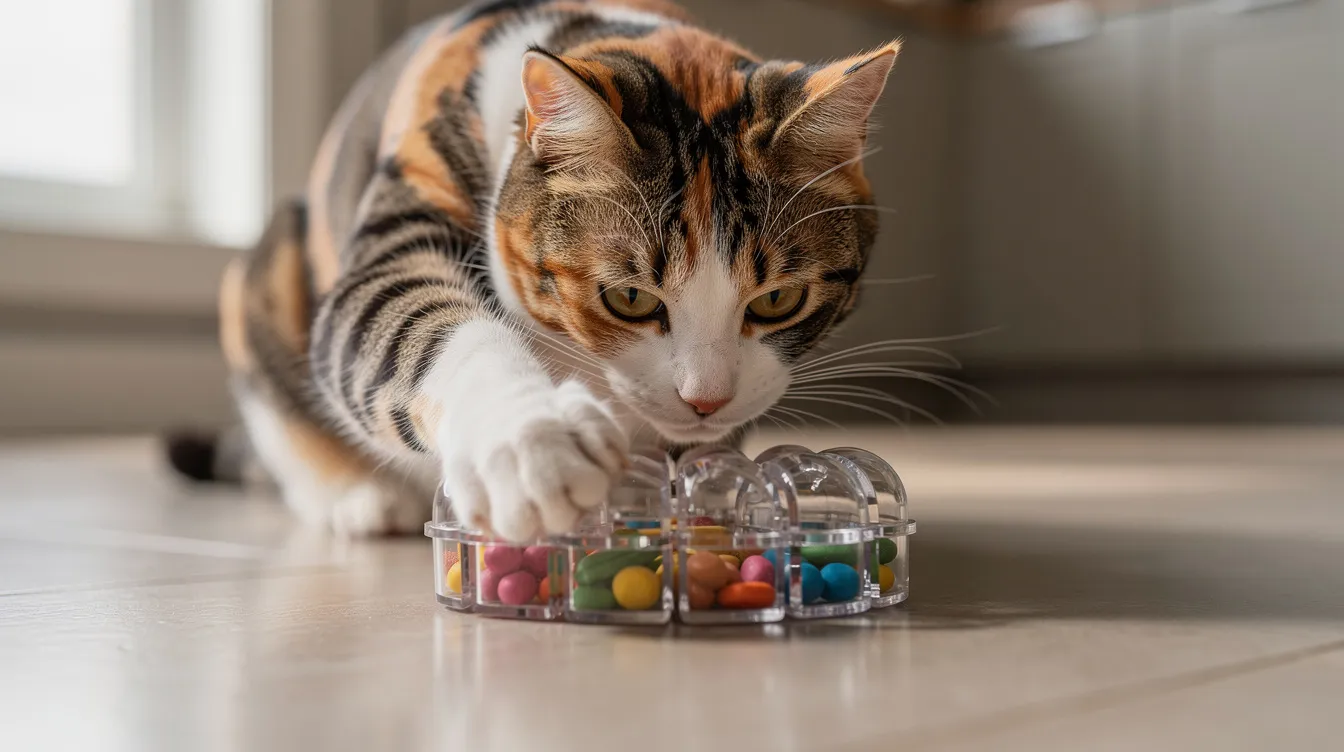
Puzzle toys are some of the best toys for mental stimulation, slower eating, and keeping a cat entertained while you're at work or busy around the house. Puzzle toys engage cats mentally while they eat, turning a basic meal into a problem-solving challenge. Puzzle toys engage cats' problem-solving skills, and the effort required can tire out even high-energy cats.
-
Basic puzzle feeders: Simple mazes, sliding covers, or wobble dispensers suit beginners and cats that gulp food. Puzzle toys engage cats mentally and slow down their eating, which can help prevent vomiting and support weight management.
-
Advanced activity centers: Multi-layer designs with cups, pegs, tunnels, and hidden compartments-like the Nina Ottosson Buggin-encourage searching and pawing for treats. These are excellent for food-motivated cats or any cat that needs extra mental stimulation.
-
Start easy, build up: Always begin with the simplest setting. If a puzzle is too hard, your cat will walk away frustrated and may lose interest permanently. Gradually increase difficulty as your cat masters each level.
-
Cleaning: Puzzle toys should be easy to wash with warm water and mild soap, especially when used with wet food. Residue attracts bacteria fast. Look for designs that come apart for thorough cleaning.
Choosing the Right Puzzle for Your Cat
Matching puzzle toys to your cat's age, mobility, and experience matters more than buying the fanciest option available.
-
For kittens and senior cats, choose shallow puzzles with wide openings so they can reach food easily without straining joints or getting stuck.
-
Energetic cats who flip lightweight toys need heavier, non-slip bases. A puzzle that slides across the floor every time your cat touches it isn't enriching-it's annoying.
-
Less food-driven cats might do better with puzzle toys that contain a favorite toy or a pinch of catnip inside compartments instead of treats.
-
Supervise the first few uses. Make sure your cat understands the concept and isn't resorting to chewing on plastic parts out of frustration.
Electronic, Laser, and Self-Play Cat Toys
Electronic toys, motion-activated toys, and laser pointers serve a specific purpose: keeping a cat entertained when humans are too busy for an interactive session. They don't replace hands-on playtime, but they fill important gaps during the day. Toys encourage physical activity and exercise in cats, and electronic options can deliver that stimulus even when you're on a call or out of the house.
-
Motion-activated toys: These move, vibrate, or spin when a cat bats them, triggering a chase response. They work well for cats who enjoy independent play and can keep a cat busy in smaller spaces. When the toy moves on its own, it mimics the unpredictability of live prey.
-
Automatic laser pointers: Cats enjoy interactive toys like laser pointers and chasers, but these devices need adjustable speed, a timer or auto shut-off, and must never point directly at a cat's eyes. They provide intense bursts of activity but come with an important caveat (see safety below).
-
Track-style self play toys: Balls in circular tracks or rolling ball setups are safe to leave out for solo play because they don't have loose strings or detachable parts. Track-and-ball toys promote independent play without requiring supervision, making them a reliable background enrichment option for any pet.
-
A reality check: While these can be some of the best toys for busy owners, they don't fully replace interactive play sessions with a human. An interactive cat that bonds with its owner through wand play and shared playtime will always be healthier than one relying solely on self play devices.
Safety Tips for Electronic and Laser Toys
-
Supervise the first several uses of any new electronic toy. Watch for signs that your cat is frightened, and confirm it isn't chewing wires or prying off small pieces.
-
Laser play should always end with a tangible toy or treat reward. Cats that never "catch" the dot can develop frustration and obsessive behaviors over time. Toss a treat or a cute plush mouse at the laser's endpoint to close the loop.
-
Check batteries and charging ports regularly. Discard any toy with cracked plastic or exposed electronics immediately.
-
Especially nervous or older cats may prefer quieter electronic toys with slow, predictable movement. A loud, erratic device can do more harm than good for a skittish kitty.
Safety, Cleaning, and When to Replace Cat Toys
Even the best toys become hazards if they're worn out, dirty, or left unattended in the wrong situation. People credit a lot of behavior problems to cats being "difficult," but sometimes the real issue is an unsafe or unhygienic toy collection that's gone unchecked.
-
Red flags to watch for: Loose strings, exposed stuffing, broken feathers, cracked plastic, or any detached small pieces. Any of these can be swallowed and lead to choking or intestinal blockage. After heavy play sessions, give toys a quick once-over before putting them away.
-
Weekly inspection and cleaning schedule: Do a quick visual check of all cat toys once a week. Deeper cleaning-once or twice per month-keeps bacteria and mold at bay. You can spot clean plush toys or machine wash them if the label allows. Plastic toys should be wiped down after outdoor use to remove dirt, and durable toys need to withstand exposure to sun and dirt if used on patios or near windows. Cat toys should be easy to clean and wind-resistant if used anywhere near open doors or outdoor spaces.
-
Washability matters: Choose machine-washable or hand-washable toys when possible, especially for cats who drag toys into the litter box or dunk them in water bowls. Plush toys that sit in moisture grow mold inside their stuffing.
-
Rotation doubles as maintenance: Rotating toys into "rest" and "active" boxes doesn't just keep things exciting-it also makes it easier to wash and dry them in batches.
Creating a Simple Toy Rotation Plan
A rotation system sounds complicated, but it doesn't need to be. Switching out toys can help prevent boredom in cats, and a basic plan takes five minutes to set up.
-
Divide all toys into 2–3 groups. For example: Week A toys (wand attachments, a kicker toy, crinkle balls), Week B toys (a mouse toy, track ball, a puzzle), and Special catnip toys (kept sealed and brought out only a few times per week). Keep only one group accessible at a time.
-
Add one "new" or long-hidden toy every week to renew a cat's interest without constant shopping trips. A toy that's been tucked away for a month often feels brand-new to your cat.
-
Rotation helps you notice damage sooner. When you swap groups, you're naturally inspecting each toy as you pull it from storage. It's much easier to catch a fraying seam this way than when toys are scattered across the house.
-
Pay attention to which toys hold your cat's interest longest. If your cat has lost interest in a particular item even after rotation, it might be time to retire it and try something new. During any testing period with new toys, give your cat at least 3–4 days before deciding it's a dud.
In this article, credit goes to consistent observation. Watch what your cat gravitates toward, and let that guide your purchases instead of guessing.
FAQ: Common Questions About Cat Play Toys
How many toys does my cat really need?
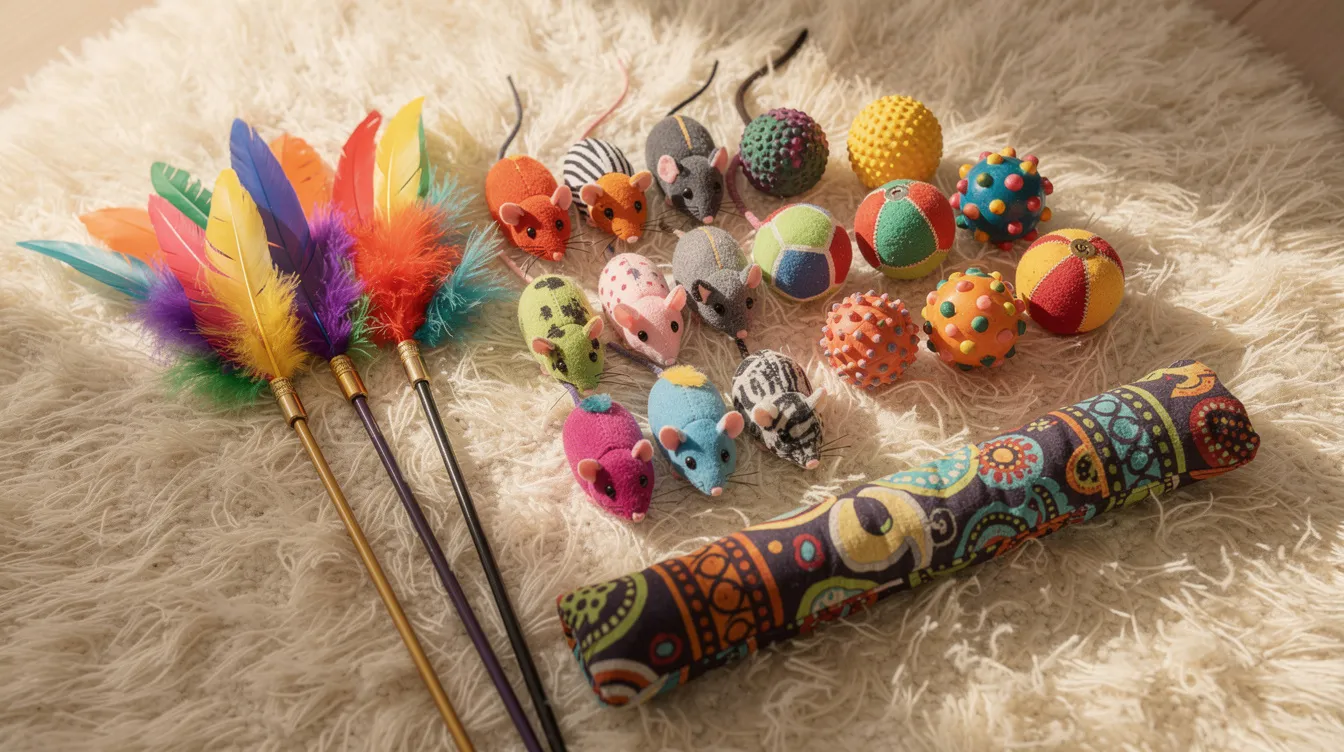
Cats don't need a pack of dozens of toys dumped in a pile. A survey of 277 indoor cats found that the average household kept about 7 toys per cat, and that's a solid starting point. Aim for 6–10 varied options-a wand, a bird toy, balls, a catnip toy, a puzzle, a kicker toy, and a dental toy-rotated regularly. Quality, variety, and rotation matter far more than sheer quantity. A cluttered basket of 30 identical mice actually reduces a cat's interest because nothing stands out.
Do indoor cats actually need toys if they seem calm?
Calm doesn't always mean content. Even relaxed indoor cats benefit from daily play to prevent boredom, weight gain, and stress-related behaviors like over-grooming or avoiding the litter box. Research consistently shows that play correlates with fewer cat behavior problems. Start with low-intensity engaging toys-soft catnip toys, slow wand movements, or a simple treat puzzle-and you'll often see a "calm" cat suddenly come alive. Many cats simply need the invitation.
What if my cat ignores every new toy I buy?
Experiment across categories rather than buying five versions of the same ball. If your cat doesn't chase, try a puzzle. If puzzles don't click, try a catnip option or a kicker toy. Play at different times of day-many cats are most active at dawn and dusk. Try "warming up" play by gently tapping a toy near your cat or hiding it behind furniture. Some cats prefer everyday items like paper balls or cardboard boxes alongside commercial toys. If a cat consistently refuses all play, consider a vet visit to rule out pain or illness. Other cats in the home can also influence play-in some cases, a shy cat won't play while a dominant companion watches.
Are there any toys I shouldn't leave out when I'm not home?
Yes. Wand toys with long strings, any toy with small detachable parts, and some electronic toys with exposed wires should only be used under supervision. Linear foreign bodies (swallowed strings or ribbons) are a genuine veterinary emergency. When you're away, leave out safer self play toys: sturdy balls, track toys, and solid kicker toys without loose attachments. These let your cat enjoy fun independent play without risk.
How often should I replace an old cat toy?
Replace toys as soon as you see visible signs of damage-tears, loose stuffing, broken plastic-even if the cat still loves them. Safety comes first. Catnip toys usually need replacing or refilling every few months because the scent fades and even the best catnip toy can't hold its potency forever. Durable puzzle toys, on the other hand, can last years with proper cleaning. After each play session, do a quick visual check. It takes seconds and can save you an emergency vet bill.
Ready to Find Your Cat's Next Favorite Toy?
Every cat has a unique play style. Some love chasing fast-moving prey, others enjoy kicking and chewing plush toys, while some prefer toys that can keep them entertained when you're busy.
If your cat goes wild for catnip and wrestling toys, the Michu Silver Vine Plush Toys are a great option. Infused with natural silver vine, they encourage grabbing, kicking, chewing, and independent play while providing an exciting sensory experience for many cats.
For active hunters who love stalking and pouncing, the Michu Natural Interactive Cat Wand helps recreate the thrill of chasing birds and fluttering prey. Interactive feather toys are one of the most effective ways to encourage exercise, strengthen the bond between cats and owners, and satisfy natural hunting instincts.
And for cats that need entertainment while you're working or away from home, the Michu Interactive Cat Treat Dispenser Tumbler Toy delivers unpredictable movement that can trigger a cat's chase response and keep them mentally engaged throughout the day. It's an excellent choice for energetic indoor cats that crave extra stimulation.
The key is variety. By combining different toy types such as catnip toys, interactive feather toys, and self-play electronic toys, you can create a richer environment that keeps your cat physically active, mentally stimulated, and less likely to become bored.