


Key Takeaways
-
A healthy adult cat licking a tiny smear of xylitol-free peanut butter is usually not an emergency, but it is not a good habit to start.
-
Peanut butter offers no added nutritional benefit for obligate carnivores and is a high calorie treat that can contribute to obesity, pancreatitis, and diabetes over time.
-
The biggest immediate dangers are toxic additives like xylitol and the choking hazard from peanut butter’s sticky texture—always read the label.
-
Watch for vomiting, diarrhea, coughing, or lethargy after exposure, and contact a vet immediately if the peanut butter contained xylitol.
-
Meat-based treats like chicken or tuna are far safer healthier treat options for bonding, training, or giving pills.
Is Peanut Butter Safe for Cats to Lick?
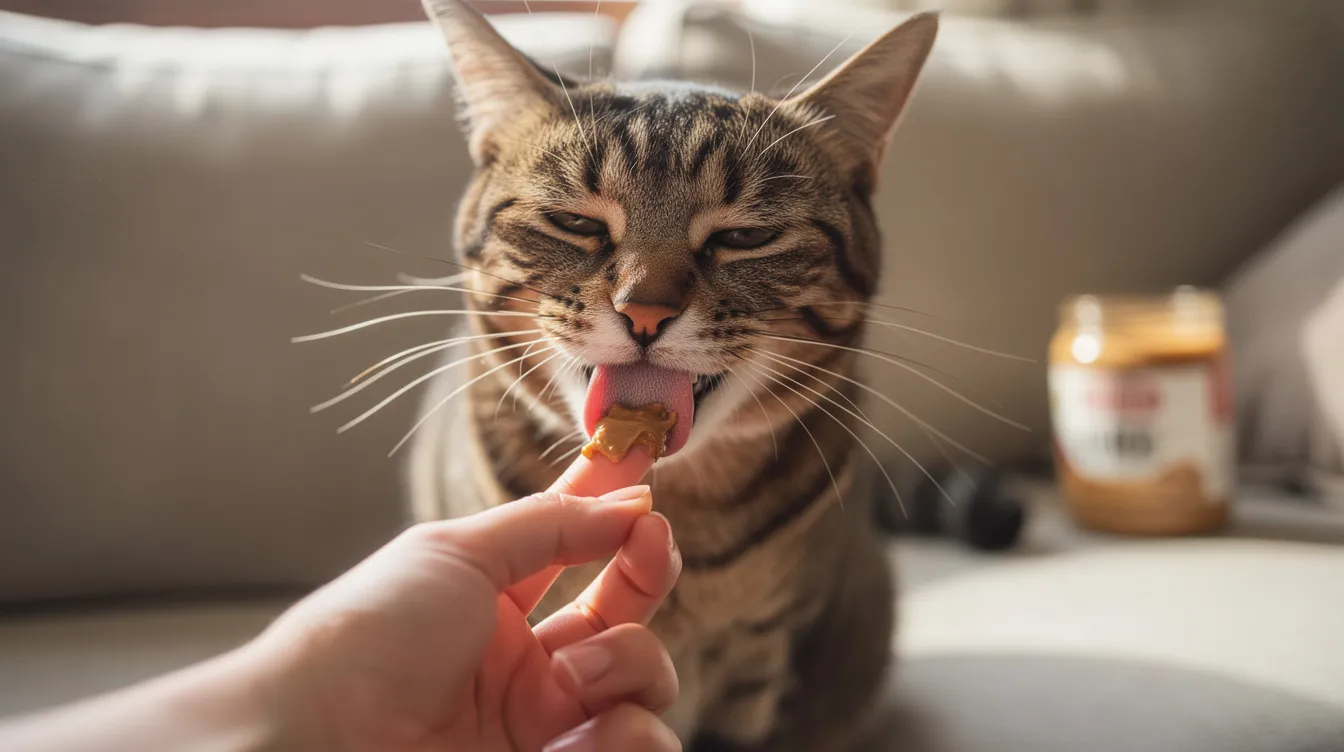
If you’re wondering whether your cat is fine after licking peanut butter off your spoon today, here’s the short answer: a small amount of plain, xylitol-free peanut butter is generally not toxic to a healthy adult cat. However, that doesn’t mean peanut butter safe for routine feeding.
Cats are obligate carnivores, which means their bodies are designed to thrive on meat proteins rather than plant based foods like peanuts. Peanut butter has no real nutritional value for your feline friends and functions as empty calories that can displace proper nutrition.
Here’s what to keep in mind:
-
A pea-sized lick is unlikely to cause serious harm in most cats
-
Repeated eating peanut butter can lead to weight gain and gastrointestinal issues
-
Too much peanut butter over time increases risk for diabetes and pancreatitis
-
Kittens, senior cats, and cats with existing health conditions should avoid giving peanut butter entirely
Problem Ingredients in Peanut Butter for Cats
Not all jars are created equal. Before your cat eats any spread, check the label carefully.
Xylitol is the most dangerous concern. This artificial sweetener—sometimes listed as birch sugar or wood sugar—appears in some sugar free peanut butters. While xylitol poisoning research focuses primarily on dogs, cats may also experience symptoms like vomiting, lethargy, and seizures. Any xylitol exposure warrants an immediate call to your veterinarian or the ASPCA Animal Poison Control at 1-888-426-4435.
Other additives to avoid:
-
Added sugar (contributes to diabetes risk)
-
Salt (cats need under 50mg daily; some peanut butters exceed 150mg per tablespoon)
-
Hydrogenated oils and palm oil (poorly metabolized by feline livers)
-
Chocolate or raisins (both toxic to cats)
The sticky, glue-like texture itself creates a mechanical choking hazard. Peanut butter can coat the roof of the mouth and throat, causing gagging—especially dangerous for brachycephalic breeds like Persians.
Can Cats Digest Peanut Butter and Peanuts?
Feline digestion is optimized for animal-based food, not legumes. Cats lack sufficient enzymes to break down large amounts of plant fat and fiber efficiently.
Common digestive problems after eating peanut butter include:
-
Soft stool or diarrhea within 4-12 hours
-
Gas and abdominal pain
-
Occasional vomiting
Interestingly, cats cannot taste sweetness, so the sugar in peanut butter provides no enjoyment—just unnecessary calories. Whole peanuts pose additional concerns: shell fragments and hard pieces can cause intestinal obstruction or choking.
If your cat seems food-motivated, channel that interest toward high-protein treats that actually meet their nutritional needs.
Should You Let Your Cat Lick Peanut Butter as a Treat?
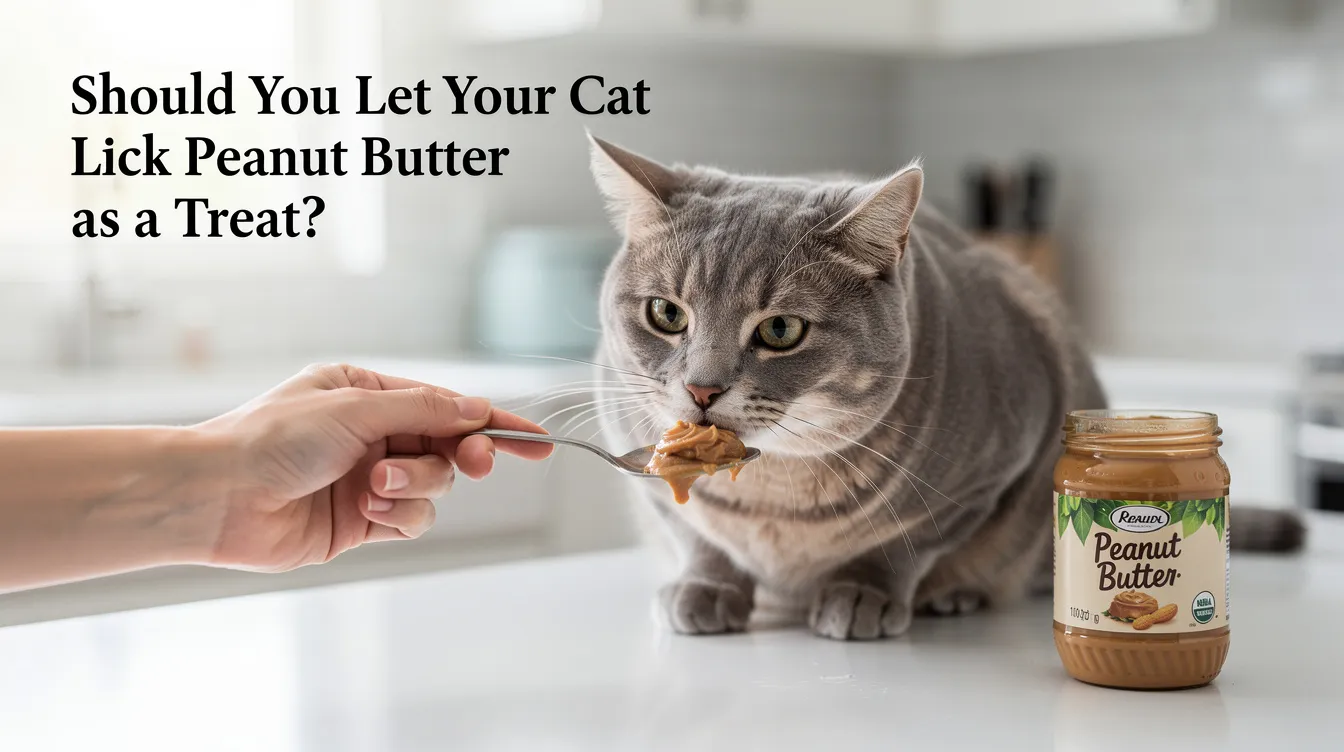
Many owners offer a fingertip of cat peanut butter because their dog enjoys it. But what works for dogs doesn’t suit kitties.
Routine peanut butter treats are not recommended. If you absolutely insist:
-
Limit to a smear smaller than a pea (roughly 1/8 teaspoon)
-
Use only xylitol-free, chocolate-free varieties
-
Offer no more than once every 1-2 weeks
-
Ensure all treats stay under 10% of daily calories (for a 4-5 kg cat eating 250 calories daily, that’s under 25 calories from treats)
Some owners ask about using peanut butter to hide pills. While this works for dogs, most cats reject the oily texture. Ask your vet about cat-specific pill pockets instead.
My Cat Licked Peanut Butter: What Should I Do Right Now?
Stay calm. A single lick of plain peanut butter rarely constitutes an emergency for a healthy cat.
Follow these steps:
-
Remove access to the jar immediately
-
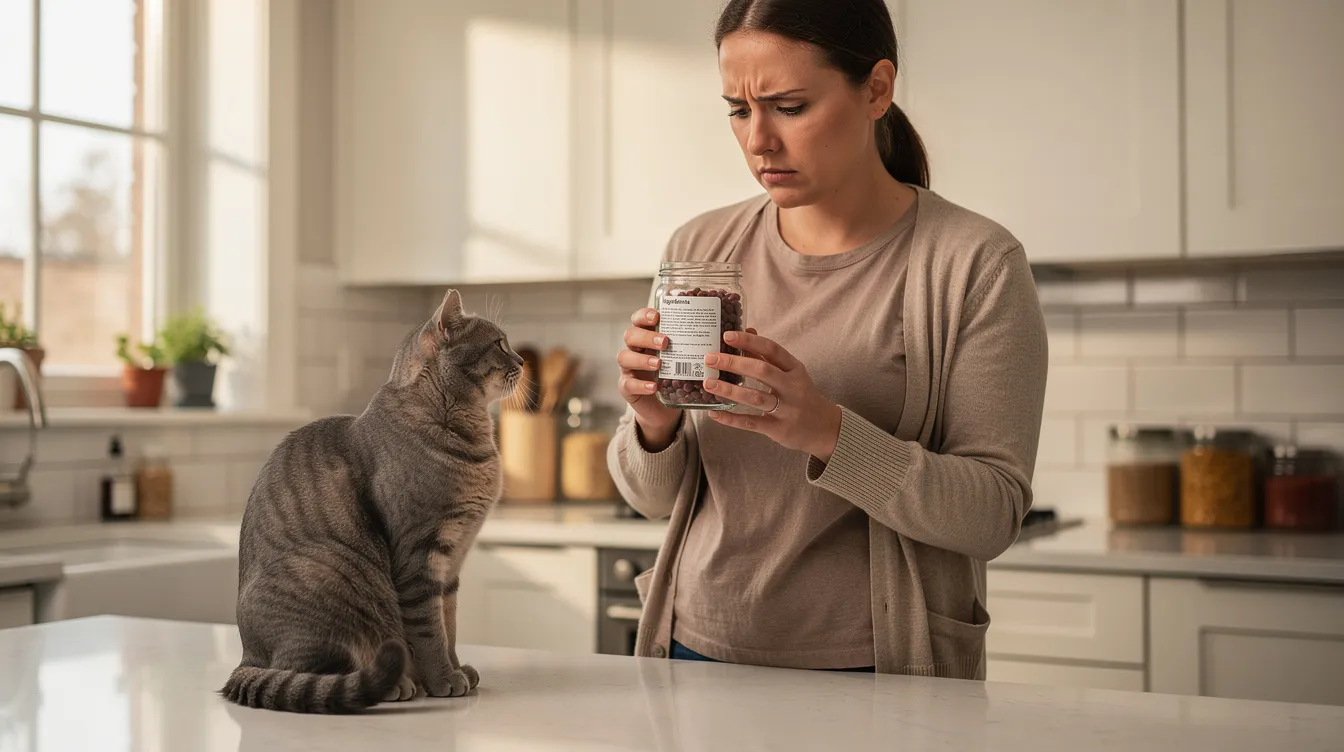
Check the ingredient label for xylitol, chocolate, or raisins
-
If any toxic ingredient is listed, call your vet or Pet Poison Helpline (1-800-213-6680) immediately
-
Bring the jar or a photo of the label to any vet visit
For peanut butter without dangerous additives, monitor your pet over 24 hours for:
-
Vomiting or diarrhea
-
Coughing, gagging, or wheezing
-
Drooling or difficulty swallowing
-
Unusual lethargy
Skip fatty food for the rest of the day and ensure fresh water is available. If your cat refuses food or water for more than 12-24 hours, contact your veterinarian.
Are Cats Allergic to Peanut Butter or Peanuts?
True peanut allergies in cats appear uncommon, but they’re possible. An allergic reaction typically occurs minutes to hours after exposure.
Watch for these symptoms:
-
Intense itching, especially around ears and paws
-
Facial swelling or hives
-
Sudden coughing or wheezing
-
Vomiting or diarrhea
Some reactions are intolerances (GI upset only) rather than immune allergies, but both mean you should avoid peanut butter in the future. Any breathing difficulty or collapsed posture requires immediate emergency vet care.
Mention any suspected nut sensitivity at your cat’s next wellness exam.
Healthier Alternatives to Peanut Butter for Cats
Wanting to share food with your pet comes from love. Fortunately, safer options exist that actually support your cat’s health.
Better treat choices:
-
Small pieces of cooked, plain chicken or turkey (no skin, bones, or salt)
-
A teaspoon of canned tuna or fish in water (occasional snack only)
-
Commercial freeze-dried meat treats made for cats
-
A spoonful of your cat’s regular wet food offered by hand
Introduce any new treat gradually and keep total treats under 10% of daily calories. Ask your veterinarian for personalized advice if your cat has special diet needs like renal disease or food allergies.
FAQ
Can I let my cat lick the knife or spoon after making a peanut butter sandwich?
An occasional tiny lick of plain, xylitol-free peanut butter from a utensil is unlikely to harm a healthy adult cat. However, it’s hard to control the very small amount consumed, and repeated exposure adds unnecessary fat and calories. Better to wipe utensils clean and offer a bit of wet food if you want to share a moment with your cat.
Is crunchy peanut butter worse for cats than smooth peanut butter?
Yes, crunchy varieties add extra risk. The small peanut pieces create an additional choking hazard on top of the already sticky texture. This is especially concerning for small cats or those that eat quickly. If your cat licked crunchy peanut butter, watch closely for coughing, gagging, or breathing difficulty.
Can I use peanut butter to hide my cat’s pills?
This technique works better for dogs than cats. Many cats reject the smell and sticky texture. Crushing tablets without vet approval can be unsafe. Ask your veterinarian about cat-specific pill pockets or flavored liquid medications instead.
Is homemade peanut butter safer for my cat than store-bought?
Homemade peanut butter made from plain, unsalted peanuts removes some additive concerns but doesn’t solve the fundamental issues: high fat content, calories, and poor feline digestibility. Even “clean” versions should only be offered in tiny amounts, rarely. Meat-based treats remain the better choice.
My cat loves licking peanut butter every time I eat it—how do I stop this safely?
Store peanut butter in a closed cupboard and avoid leaving open jars on counters. Eat in a room the cat cannot access, or offer an alternative reward like regular kibble or a special cat treat at the same time. Consistency matters—after several weeks without access, most cats will stop begging and look forward to their safer substitute treat.